Multitrack Grouping and Phase Disruption Pitfalls
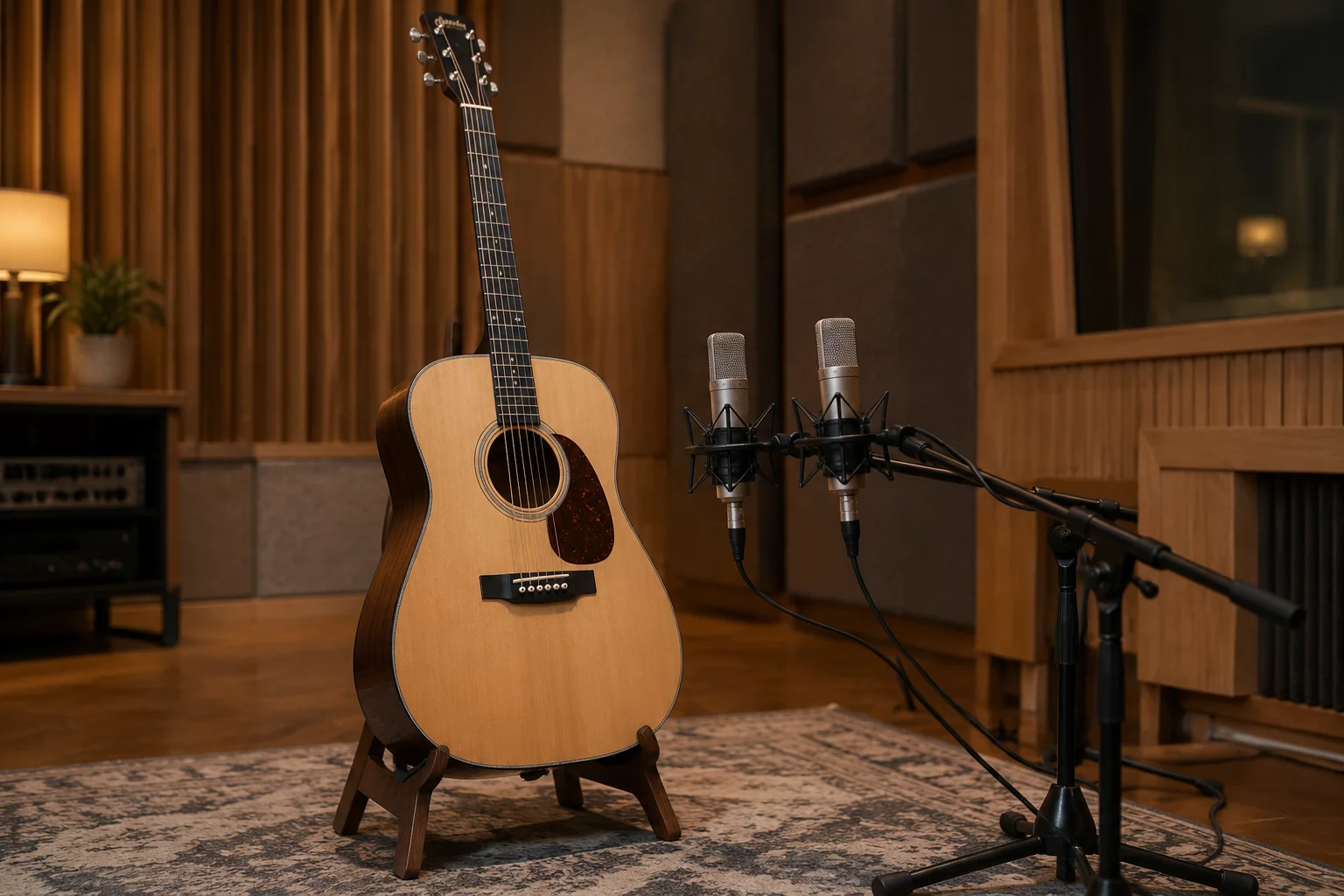
Tracking acoustic guitar with multiple microphones introduces spatial depth that enriches a mix, yet it multiplies editorial vulnerabilities. A typical studio configuration pairs a small-diaphragm condenser focused on the 12th fret with a large-diaphragm mic pointed at the lower bout. When an editor slices one lane independently of the other, micro-timing differences between capsules become erratic. Even a single-millisecond offset causes comb filtering that destroys body weight and smears pick definitions across the stereo field.
— Elena Rostova, Acoustic Instrument Editor“Splitting acoustic guitar takes across multiple microphones without absolute group edit locking immediately turns vibrant room resonance into brittle comb filtering.”
Navigating Fret Friction and Ringout Decay Discrepancies
Fret squeaks often tempt editors to perform aggressive surgical slices right across bar lines. Doing so ruptures the continuous decay of the guitar soundboard. The acoustic body continues to radiate acoustic energy for seconds after strings are struck. Splicing into that decay without matching dynamic volume causes noticeable level drops that leap out of an uncompressed mix.
Effective editorial practice places slice points immediately ahead of incoming transient attacks. The initial strike of the pick masks the underlying transition, while an equal-power crossfade of eight to ten milliseconds blends pre-existing sympathetic vibrations. When comping intricate fingerstyle performances, position shifts between chords should be retained as natural mechanical cues rather than eliminated entirely, as sanitizing these gestures strips human nuance from the final track.