Independent Technical Reference & Decision Documentation
#TAKECHOICE LEDGER COMPING ENGINE

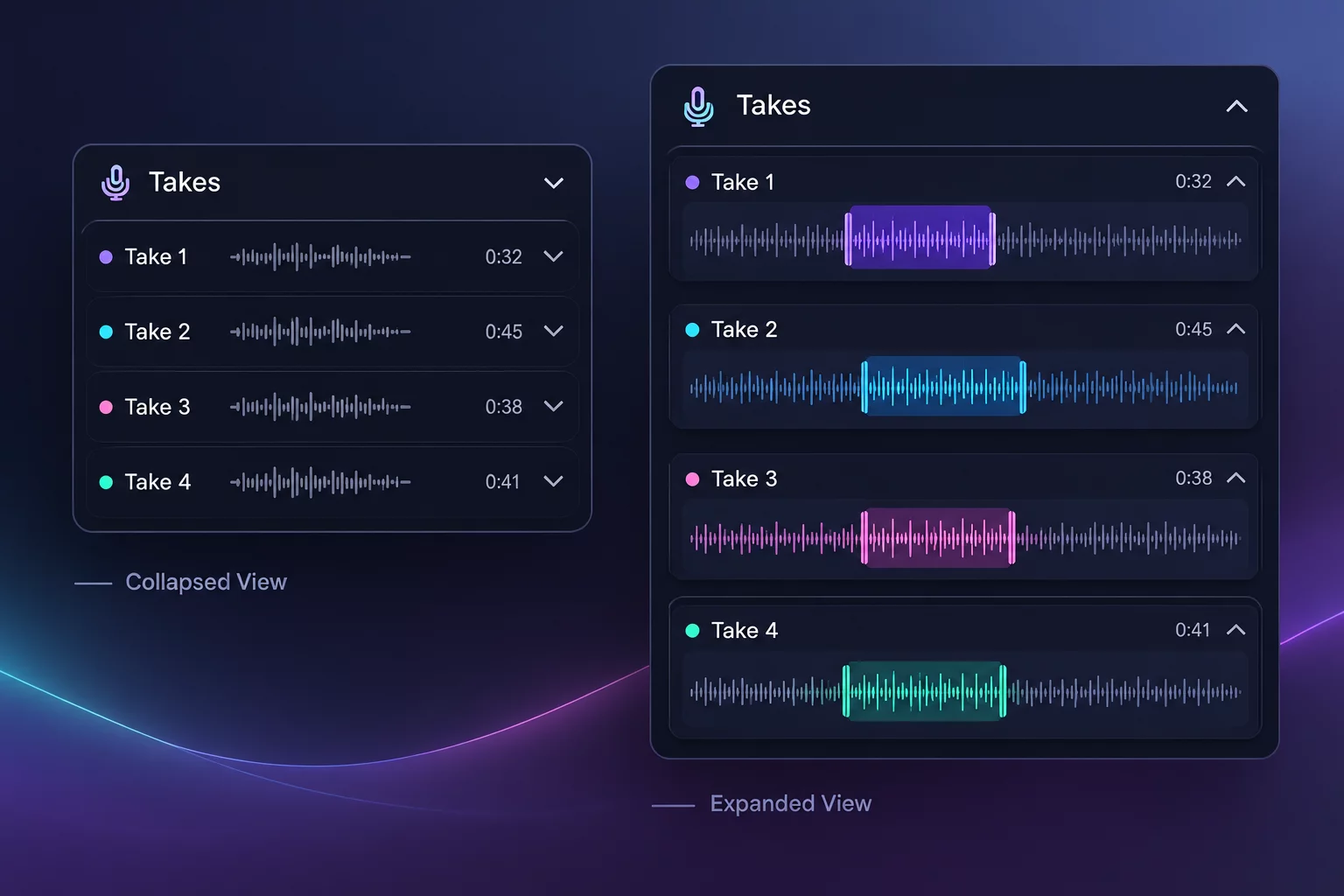
Remember Why This Take Became the Comp

Explore recording cases about alternate takes, phrase selection, performance consistency, edit decisions, and comp notes.

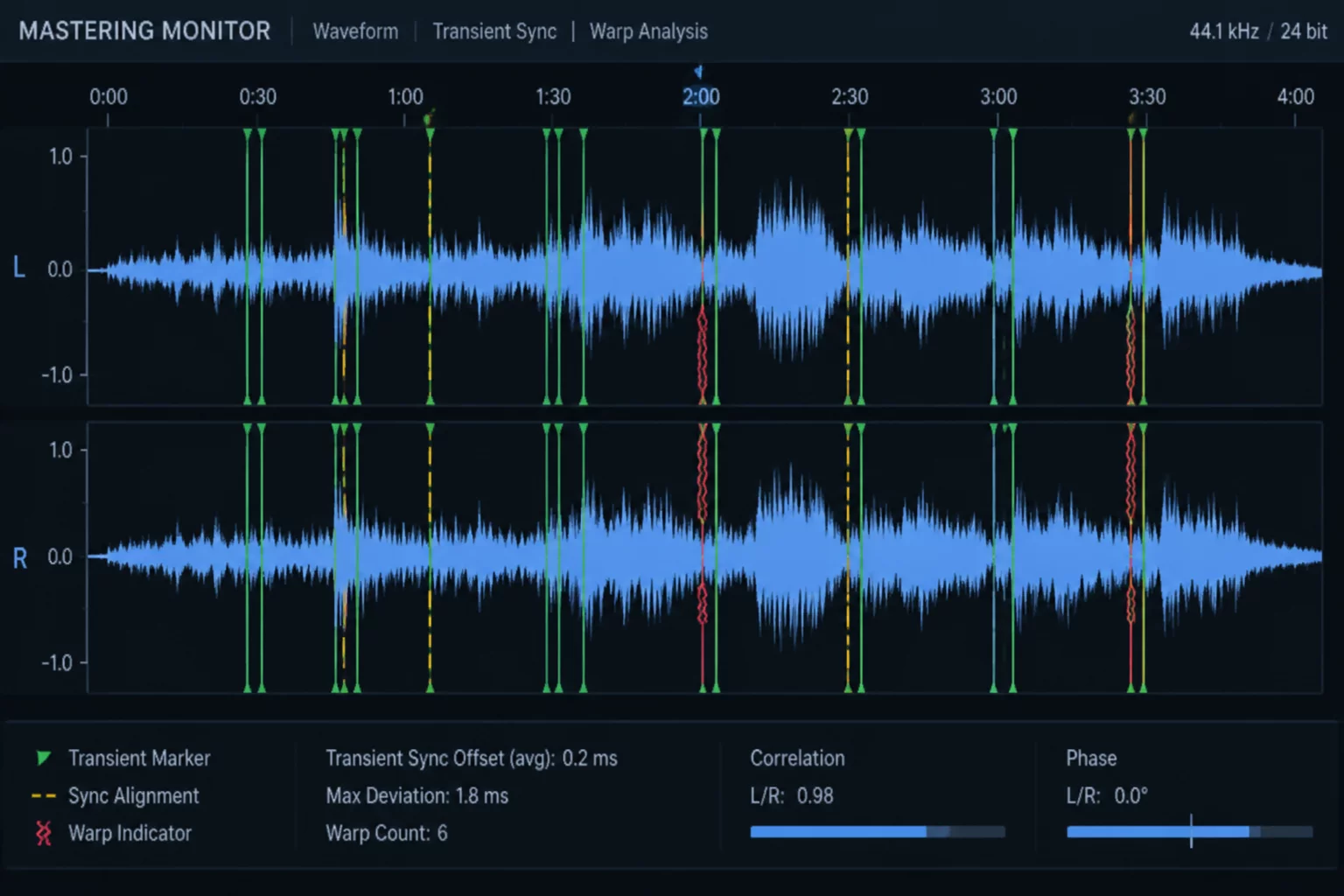
Observable Audio Metrics
October 2026 Edition
Zero Subjective Scoring
Lead Vocalist Tracking Session in Acoustic Isolation Booth
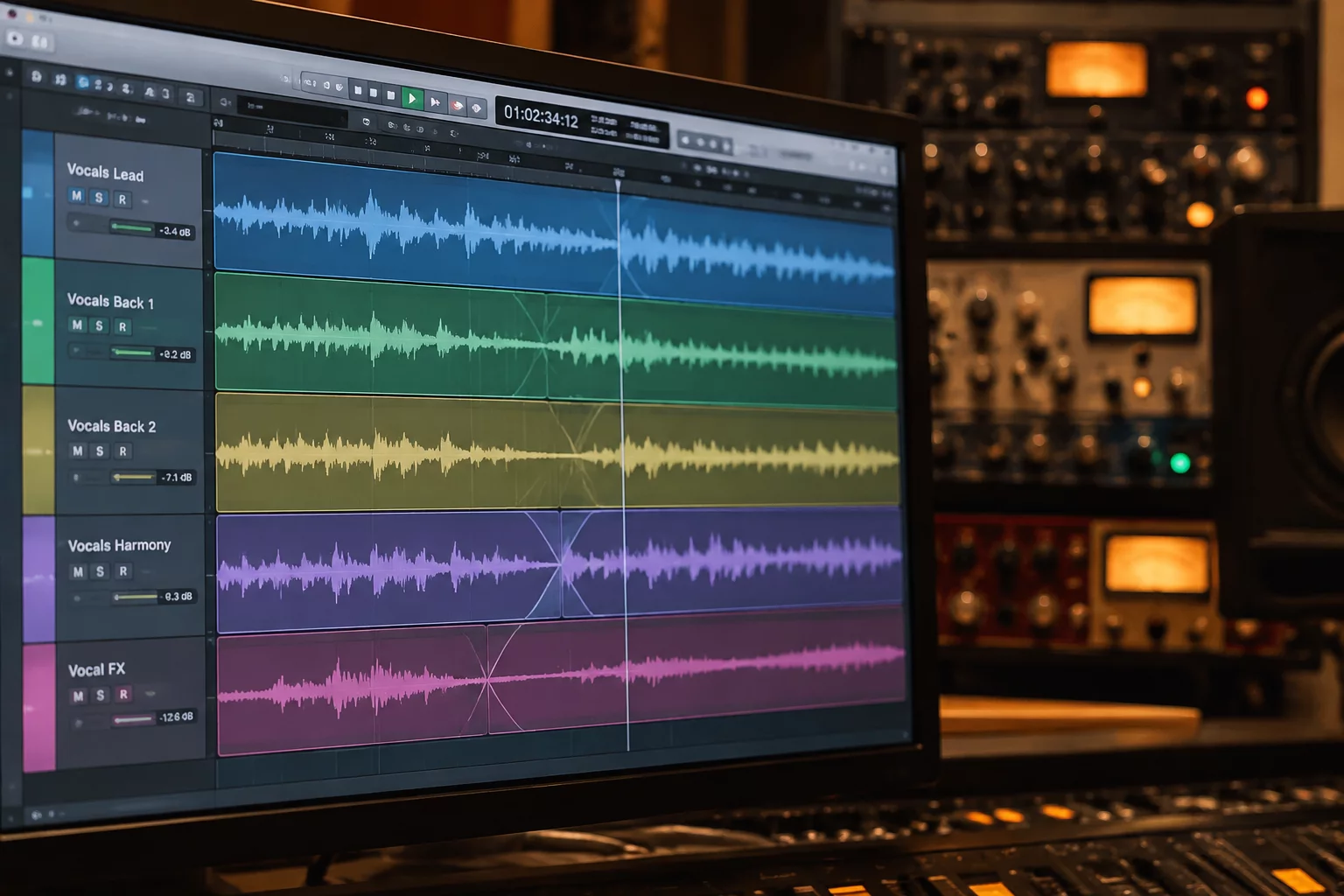
Session Case 07Vocal Stack Dynamics & Phase Alignment
Ledger Architecture

Observable Editorial Reasoning Framework

Vocal comping documented through forensic audio characteristics rather than arbitrary score metrics. Follow the structured progression from raw capture to archival selection.

Take Ledgers
Vocal Cases
Instrument Cases
Phrase Comparisons
Comp Decisions
Punch-In Cases
Alternate Versions

We do not score "95% vocal quality"; we record observable editorial reasons.

Stage 01 Take
Stage 02 Strong Section
Stage 03 Weak Section
Stage 04 Comparison Point
Stage 05 Selected Passage
Stage 06 Reason
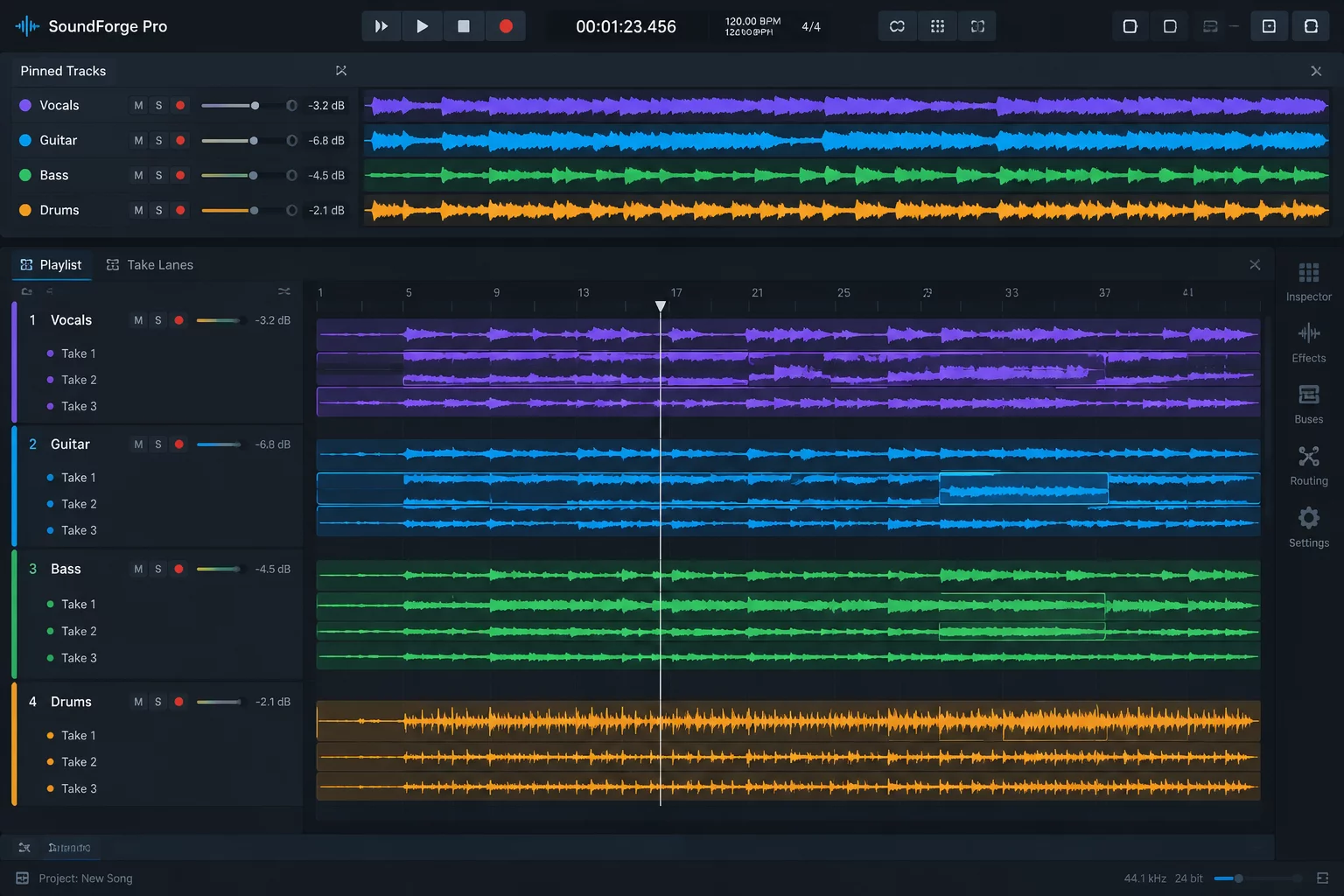
Phrase Unit: Verse 02 (Bars 17–24)
Click any take lane to audit the editorial reasoning chain
Chosen Pass

Take 03 — Primary Lead Vocal

00:42.150 – 00:51.840
Bar 17–20 [Optimal Timbre] Bar 21–23 [Selected Cut] Bar 24 [Crossfaded Tail]
Reference Pass

Take 01 — Alternate Neutral Pass

00:42.150 – 00:51.840
Bar 17–19 [Warm Tone] Bar 20–24 [Pitch Drift -18c]
Splice Donor

Take 02 — High Velocity Safety Pass

00:42.150 – 00:51.840
Bar 17–19 [Audible Gasp] Bar 22 [Transient Donor] Bar 23–24 [Neutral]
Audit Verification

Take 03 (Master Choice)

Selected Active Target
Strong Section

Bars 17–20: Unbroken diaphragmatic support with steady 140Hz fundamental pitch trajectory.

Weak Section

Bar 24 release tail carries slight room spill on final unvoiced plosive.

Comparison Point

Bar 21 beat 3 consonant onset vs Take 01 soft attack.

Selected Passage

00:42.150 – 00:51.840 (Full Phrase Composite with crossfade at Bar 20.4).

Final Observable Editorial Reason

Selected for consistent vowel formant envelope, natural unforced inhalation noise, and intact micro-dynamics across octave transitions.

Methodology Archive Records

Take 3 Had the Best Chorus, Take 5 Had the Best Ending

Detailed technical analyses of multi-source comping selections, phase consistency checkpoints, and structural take assemblies from our editorial archives.

Comparative Review Archive

Precision Workflows & Sync Architecture

Operational Audit

The Quantifiable Cost of Undocumented Comping

Unindexed take libraries create friction long before final delivery. Calculate how undocumented takes, disorganized playlist stacks, and repetitive audition cycles degrade studio throughput and listener objectivity.

Session Tracking Parameters

24 hrs
5 hrs 30 hrs 60 hrs
45 takes
10 75 150
4 rounds
1 6 12

Metrics are derived from baseline DAW logging friction: blind crossfade re-auditions, waveform visual re-scanning, and loss of critical listening freshness during composite assembly.

Simulated Annual Studio Deficit Dynamic Model
Lost Studio Hours
412
hrs / year
Redundant Auditions
9,720
re-scrubs / yr
Fatigue Index
68%
ear saturation

Primary Workflow Attrition Factors

  • Scrubbing unindexed heads & tails: An estimated 103 hrs consumed navigating raw recording lanes without technical marks.
  • Context degradation during recalls: Switching revisions without decision notes requires an average of 3.2 passes per edited bar.
  • Acoustic ear fatigue: Critical evaluation of micro-pitch and breath artifacts diminishes sharply after 45 minutes of undocumented looping.
Examine technical logging protocols to replace guesswork with indexed take architecture.
Read Sample Ledger
PRE-HIRE TECHNICAL AUDIT

Contractor & Engineer Comping Verification Checklist

Before contracting freelance tracking engineers, vocal editors, or comping specialists, verify their production discipline against strict acoustic standards. All editorial decisions must rest on observable signal fidelity rather than arbitrary scoring.

Pre-Booking Readiness Score:0 / 8 Verified
REQ-01 • COMP LEDGER

Observable Acoustic Characteristic Logging

“Do you log take decisions using observable acoustic criteria instead of subjective numerical ratings?”

Audit Standard:Decisions must document breath naturalness, consonant onset, and pitch stability.
Inspection Method:Review sample comp note ledger for timestamped spectral/transient notes.
REQ-02 • COMP LEDGER

Multi-Lane Alternate Pick Lineage

“How do you document discarded candidate syllables for secondary double and harmony comping?”

Audit Standard:Secondary runner-up takes must remain tagged for automated double-tracking alignment.
Inspection Method:Inspect color-coding or lane ledger tracking secondary consonant matches.
REQ-03 • CROSSFADE HYGIENE

Zero-Crossing Placement & Micro-Fades

“Where are your edit boundaries located relative to vocal sibilance and plosive releases?”

Audit Standard:Splices restricted to zero-crossings or pauses with 5–10ms equal-power crossfades.
Inspection Method:Zoom to sample-level edit points to verify zero waveform boundary clipping.
REQ-04 • CROSSFADE HYGIENE

Room Tone & Breath Bed Continuity

“How do you prevent abrupt noise-floor shifts when stitching vocal phrases from different passes?”

Audit Standard:Ambient room tone must bridge transitions without silence gating or room truncation.
Inspection Method:Solo track audition with +12 dB post-fader gain to expose background dropouts.
REQ-05 • PHASE COHERENCE

Rigid Multi-Mic Edit Grouping

“What edit grouping protocol do you enforce across multitrack drum kits and acoustic pairs?”

Audit Standard:All overheads, close mics, and rooms cut in unison; zero independent slip edits.
Inspection Method:Confirm edit group active status across all rhythm stems in the DAW project.
REQ-06 • PHASE COHERENCE

Summed Mono Transition Audit

“How do you verify low-end coherence across layered takes and double-tracked instruments?”

Audit Standard:Phase correlation meter must remain positive (> +0.7) through all composite crossfades.
Inspection Method:Audit edit transitions under mono-sum monitoring for bass cancellation artifacts.
REQ-07 • PLAYLIST ARCHIVING

Standardized Playlist Naming Syntax

“What naming taxonomy do you enforce on sub-playlists before consolidating composite masters?”

Audit Standard:Enforce [Track]_[Take#]_[Date] taxonomy; un-consolidated master comp preserved.
Inspection Method:Inspect DAW session playlist drop-down list for consistent syntactic hygiene.
REQ-08 • PLAYLIST ARCHIVING

Raw Parent Playlist Non-Destructive Preservation

“Do you commit destructive pitch-shifting or time-stretching onto original source takes?”

Audit Standard:Zero destructive offline rendering; all source playlists kept untouched in project history.
Inspection Method:Verify audio bin directory timestamps match original tracking session bounds.

Need structured comping templates for your studio team?

Explore our methodology and standardized Pro Tools session playlist protocols for recording and comping documentation.

Direct Engineering Intake

Request Technical Tracking Breakdown

Submit your session details to receive an itemized take decision log and playlist comping audit prepared by our engineering desk.

Turnaround Commitment

Documentation Delivered Within 24 Business Hours

Our senior editors analyze your tracking scope against observable acoustic criteria: breath naturalness, consonantal crispness, and phrase dynamic contour.

01
Session Submission
Specify channel count and track format
02
Detailed Ledger Return
Complete PDF audit sent to your inbox