Independent Technical Reference & Decision Documentation
Comping Methodology Ledger

Bass Line Performance Consistency Case

Systematic analysis of fundamental pitch stability, fingerstyle transient uniformity, and DI-plus-microphone phase integrity across multi-take rhythm sessions.

2026-09-27
Sarah Lin
7 min read
Rhythm Section Comping
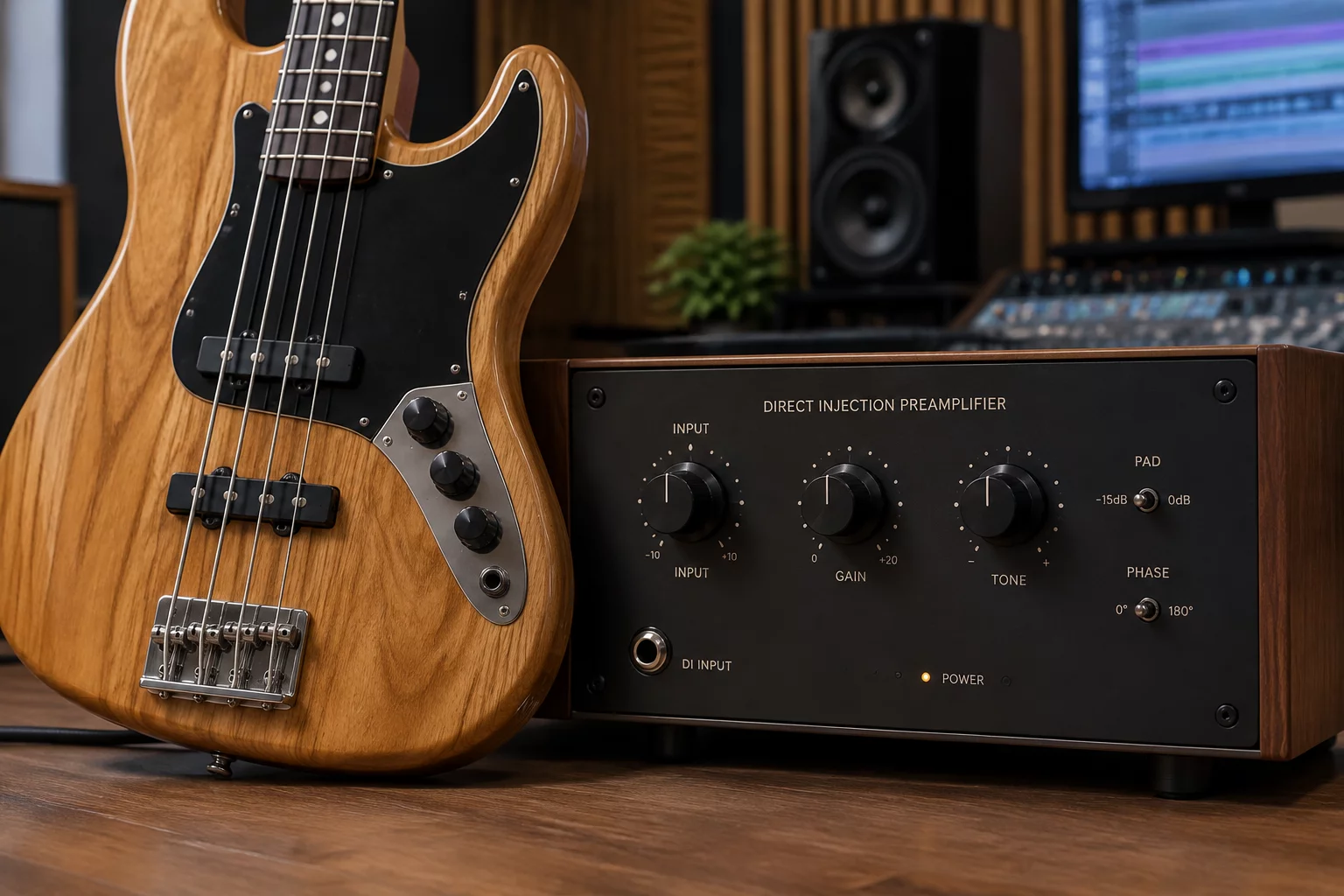
Vintage electric bass guitar beside studio reference monitors and dynamic waveform display
Ledger Case 05 Multi-track DI and cabinet capture evaluation at 40-120 Hz fundamental
Transient Preservation Sub-Bass Phase Lock Zero-Crossing Splicing Envelope Uniformity RMS Headroom Continuity
Technical Quality Parameters

Observable Evaluation Criteria for Low-End Consistency

Fundamental Pitch Stability

Continuous cycle tracking across the 35 Hz to 90 Hz bandwidth to prevent sub-harmonic frequency dropouts during note changes and vibrato tail-offs.

Transient Pluck Attack Uniformity

Comparative analysis of initial fingerstyle plucking strikes on direct-injection signals to sustain punch and pocket cohesion alongside the kick drum.

DI-to-Microphone Phase Window

Rigorous measurement of acoustic transit time between direct preamplifier outputs and cabinet cone microphones across all take boundaries.

Dynamic Ring-Out Envelope

Verifying natural sustain continuity on tied whole notes between takes without early finger releases, unnatural mutes, or abrupt amp decay cuts.

Zero-Crossing Crossfade Geometry

Placement of splice points strictly at zero-voltage waveform intersections to prevent low-frequency DC offset clicks and speaker thumps.

Upper Harmonic Fret Noise Balance

Monitoring 1.8 kHz to 3.5 kHz metallic string friction and fretboard buzz to ensure consistent timbre across different recording passes.

Key Takeaway Rules for Low-End Assembly

  • Prioritize kick drum downbeat lock over absolute pitch perfection when auditioning candidate takes.
  • Always link DI and amplifier tracks in grouped edit lanes before making a single cut to avoid destructive comb filtering.
  • Place edit transitions right in front of fresh transient attacks rather than across decaying low-frequency bodies.
  • Evaluate composite takes using high-resolution low-frequency monitors or planarmagnetic reference headphones.

Dual-Signal Capture: Managing DI and Microphone Coherence Across Takes

When comping electric bass recorded through simultaneous direct-injection boxes and miked speaker cabinets, editing decisions cannot be made on single channels independently. An edit point placed on a clean DI track causes destructive phase cancellation at 60 Hz if the corresponding microphone channel is spliced at a slightly offset point. Locking DI and amplifier tracks into unified edit groups before auditioning guarantees that the air-travel delay between speaker cone and microphone diaphragm stays intact across every cut. In addition, checking waveform polarities between adjacent takes prevents abrupt phase flips when transitioning from bar four of Take 2 into bar five of Take 4.

“A composite bass take might feel seamless on small nearfield monitors, but the second it hits a calibrated subwoofer system, inconsistent note lengths and minute phase discrepancies will empty out the entire bottom octave.”

— Sarah Lin, Senior Tracking & Comping Specialist

Transient Articulation and Low-Frequency Decay Continuity

Bass lines exist in two distinct domains: the initial percussive transient of the finger or pick, and the sustained fundamental resonance that anchors the harmony. During take selection, player stamina often introduces noticeable shifts in touch. Early passes often feature sharp attack transients, while later passes exhibit more fluid phrase connections alongside slightly reduced attack definition due to hand fatigue. Splicing between these takes requires careful consideration of touch balance.

Crossfades must be placed in rests between notes whenever possible. For legato lines lacking rests, crossfades should be kept between 6 and 10 milliseconds, landing right on the leading edge of a new pluck rather than inside the tail of a ringing fundamental. This masks the splice under the percussive strike, keeping the energy punchy and preventing noticeable volume drops in the arrangement.

Common Editorial Inquiries

Bass Comping Frequently Asked Questions

Low frequencies have long cycle periods. Splicing a bass waveform away from a zero-crossing creates an instantaneous DC jump, which manifests as a distinct low-end thud or click through unfiltered monitors.

Comp assembly must precede any tuning intervention. Pitch-correction algorithms introduce variable phase latency that can alter transient shapes and ruin the phase relationship between DI and miked tracks.

Passive pickups are sensitive to hand placement and angle. Use clip gain adjustments to match RMS levels between takes before finalizing crossfades, rather than forcing heavy downstream compression.

Sarah Lin

Senior Tracking & Comping Specialist

Sarah Lin focuses on low-frequency phase alignment and multitrack bass assembly, with extensive studio experience evaluating rhythm section performance consistency across commercial sessions.

Standardize Your Low-End Editing Workflows

Explore our complete index of objective take selection standards, alignment matrices, and phase preservation guidelines across all rhythm section instruments.