Independent Technical Reference & Decision Documentation
Take Comparisons & Tech Updates

LANDR Studio Updates VocAlign Pro Integration

An engineering review detailing automated vocal alignment tolerances, ARA bridge stability, and artifact control across complex multitrack vocal stacks.

September 8, 2026
Marcus Vance
6 min read
Vocal Alignment & DSP
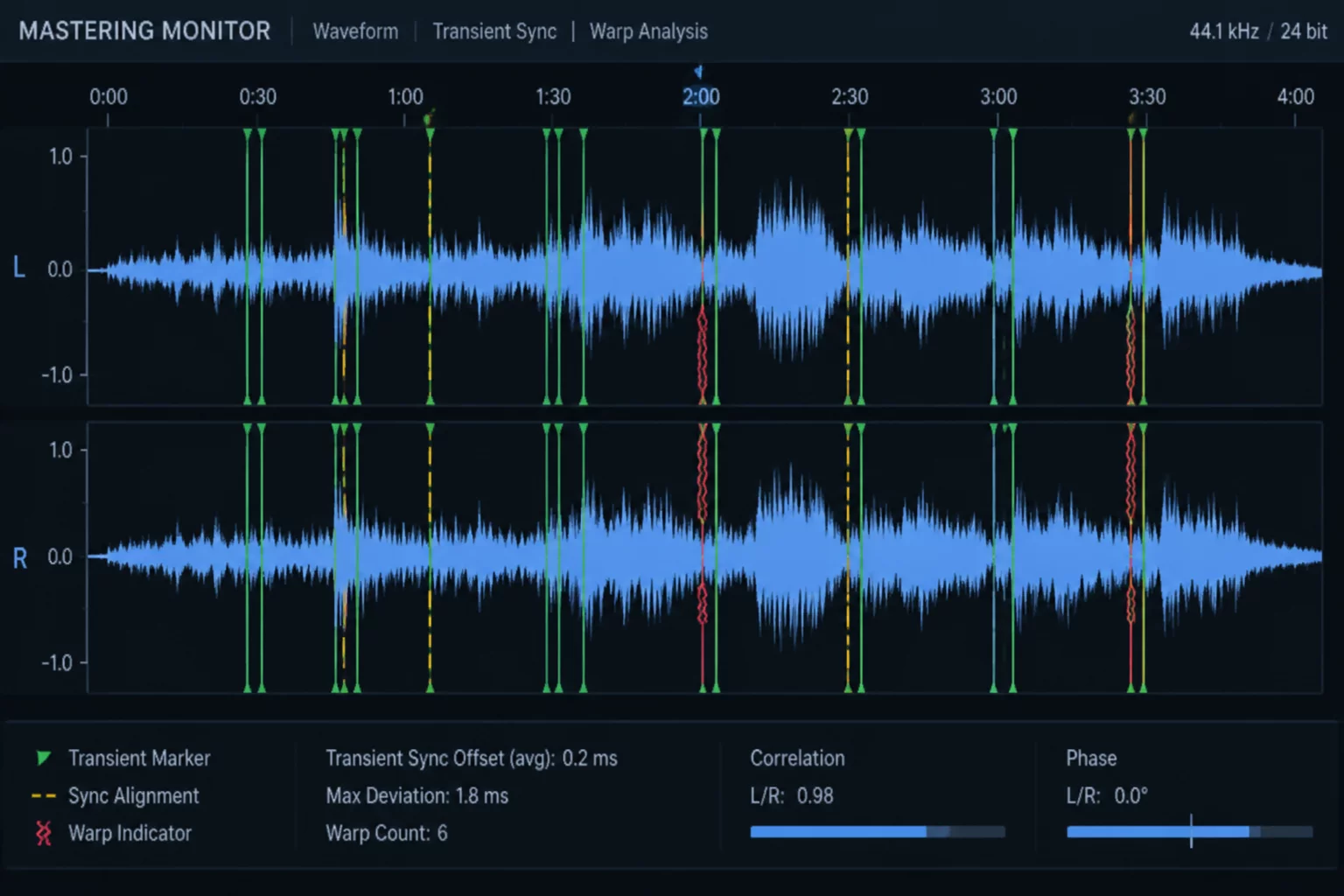
Waveform timing alignment software showing guide and dub tracks in synchronization
DSP Integration Audit VocAlign Pro running transient analysis alongside reference guide tracks in LANDR Studio
1.2ms Transient Accuracy High-Order Phase Lock ARA2 Protocol Bridge Smart Consonant Guard Zero Flanging Overlap
Observable Metrics

Core Architectural Upgrades and Alignment Criteria

Guide Transient Snapping

Spectral transient markers pinpoint leading consonant attacks across multi-layered takes without manual micro-slicing or pre-delay nudging.

Pitch-Shift Protection

Formant preserving algorithms bypass micro-pitch fluctuations, preventing unnatural robotic artifacts on expressive vocal runs.

Sibilance Energy Containment

Isolated high-frequency detector attenuates harsh friction sibilants from clashing when aligning double-tracked lead phrases.

Dynamic Energy Scaling

Dub amplitudes automatically conform to guide phrasing targets while retaining individual singer micro-dynamics intact.

Playback Buffer Throughput

Low CPU footprint across 16-channel vocal stacks enables real-time auditioning without freezing background tracks or committing offline audio.

Take Lane Non-Destructive Hook

Synchronized takes write back directly into DAW comping lanes, preserving crossfades and mute states without flattening edits.

Essential Engineering Takeaways

  • ARA2 connectivity eliminates cumbersome audio bounce cycles between recording passes and vocal group alignment.
  • Breath segments are automatically recognized and protected against unnatural synthetic compression stretching.
  • Consonants retain crisp edge definitions while vowel centers synchronize smoothly across polyphonic chorus stacks.
  • Non-destructive write-backs permit immediate editorial auditioning before final composite playlist consolidation.

Resolving Consonant Clash and Timing Jitter in Modern Vocal Stacks

When producing dense vocal arrangements featuring triple-tracked leads and four-part harmonies, micro-timing variations between takes often manifest as audible consonant smear. Plosives such as 'p' and 't' along with sibilant 's' sounds scatter across a 30 to 60 millisecond window, creating unwanted comb filtering and muddying center-channel imaging. The refreshed VocAlign Pro workflow integrated directly inside LANDR Studio targets this fundamental challenge by utilizing higher-resolution spectral transient detection. Instead of applying uniform stretching across the entire vocal phrase, the algorithm isolates percussive phonemes and shifts them onto the guide timeline while allowing subsequent vowel tails to decay naturally.

“By treating phonemes as discrete dynamic events rather than continuous uniform audio stretches, vocal composites retain their organic vitality while achieving absolute rhythmic coherence.”

— Marcus Vance, Lead Technical Audio Editor

Practical Workflow Integration in High-Pressure Comping Sessions

During commercial production sessions with strict turnaround limits, engineers rarely have the luxury of manually slicing and nudging hundreds of individual syllables across 24 vocal tracks. In previous iterations, routing stems through external alignment utilities meant exporting temporary renders, breaking take-folder continuity, and severing the link to raw comp playlists. With native DAW ARA2 integration, VocAlign Pro captures dub tracks instantaneously from adjacent playlist lanes.

The resulting audio remains pliable. If an engineer later swaps Take 3 for Take 5 on an ad-lib phrase within the master playlist, the alignment engine recalculates the transient anchor points on the fly. This prevents phase smearing while preserving the distinct tonal colorations that make secondary layers feel expansive and wide in stereo mixes.

Technical Clarifications

Frequently Asked Questions

Timing alignment operates independently of pitch processing. The algorithm stretches and compresses time intervals along vowel bodies without modifying the underlying fundamental frequency or vocal formant profiles.

The smart detection system isolates ambient breaths and unvoiced fricatives, applying gentle attenuation or bypassing them entirely to avoid unnatural pumping and sudden noise bursts.

Edits remain non-destructive as long as the ARA link is active. Audio regions can be restored to their original capture timing at any point prior to hard stem rendering.

Marcus Vance

Senior Audio Engineer & Take Ledger Specialist

Marcus has spent over 15 years tracking and editing multitrack sessions across major recording studios. He specializes in vocal comping architectures, DAW workflow protocols, and high-resolution phase coherence documentation.

Standardize Your Multitrack Comping Records

Explore systematic take comparison methodologies, phase alignment criteria, and crossfade ledger documentation designed for professional studio engineers.