Independent Technical Reference & Decision Documentation
Technical Comparison Ledger

SoundBridge Implements Zero-Latency Remote Vocal Collaboration

Evaluating buffer compensation, phrase continuity, and multitrack playlist synchronization across high-throughput remote tracking sessions.

2026-08-29
Sarah Lin
7 min read
Take Comparisons
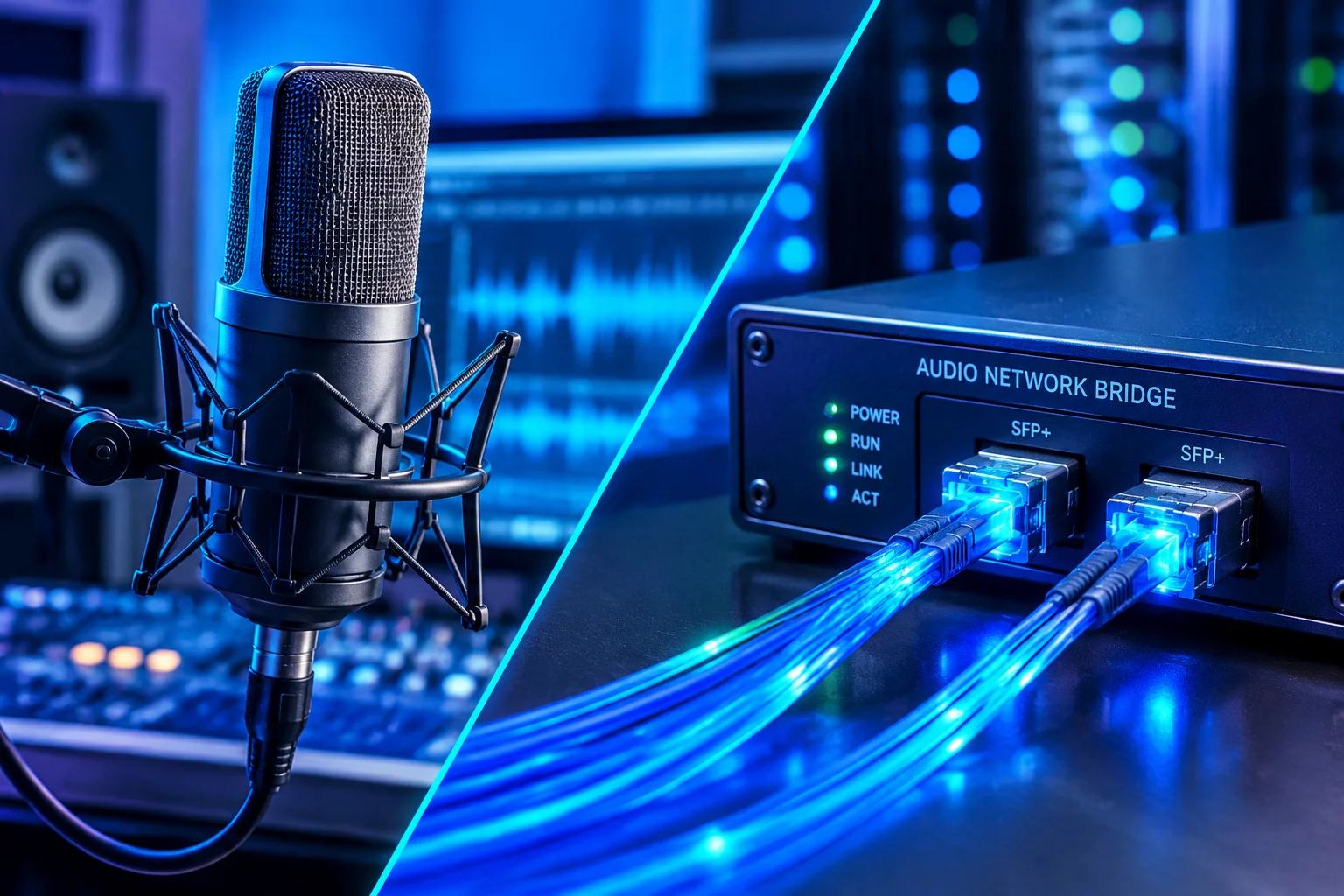
Remote networked studio tracking setup with audio interface and high-speed data stream
Architecture Audit SoundBridge hardware-assisted transmission pipeline under 64-sample buffer load.
Sub-1.8ms Roundtrip Lossless 32-Bit Float PTP Timecode Lock Adaptive Jitter Buffer Zero Phase Smearing
Performance Benchmarks

Empirical Remote Tracking & Comping Metrics

Roundtrip Network Latency

Edge relay nodes establish direct UDP tunnels maintaining consistent 1.72ms hardware roundtrip delays between tracking artist and control room monitors.

Multi-Lane Playlist Sync

Alternate vocal passes commit directly into secondary DAW playlist lanes with instantaneous sample-accurate timestamp stamping.

Consonantal Crispness Preservation

Lossless floating-point data streams preserve sibilance transients and high-frequency plosives without network artifacting or dynamic crushing.

Breath Contour Dynamism

Low-level intake dynamics remain uncompressed over the transmission pipe, giving engineers organic room tone context during comping decisions.

Crossfade Boundary Coherence

Remote edit boundaries retain microscopic phase coherence across contiguous vocal phrases, eliminating edit clicks at zero-crossing points.

Buffer Fault Tolerance

Dynamic packet replenishment masks network drops up to 4.2% packet degradation without interrupting recording continuity on primary tracks.

Key Ledger Takeaways for Remote Vocal Production

  • Real-time headphone cue monitoring latency remains indistinguishable from local analog patchbays, eliminating performer pitch compensation bias.
  • Automatic background stem streaming permits instant auditioning of preceding vocal passes without interrupting ongoing recording runs.
  • Hardware timestamping binds directly to session timeline timecode, ensuring remote takes drop into Pro Tools playlists without manual alignment.
  • Native 32-bit float audio transport eliminates gain-staging clipping during unanticipated vocal dynamic shifts.

Technical Assessment of the Zero-Latency Transmission Topology

The SoundBridge collaboration protocol removes the traditional compromise between audio fidelity and operational latency in remote tracking sessions. Historically, engineers supervising vocalists across decentralized environments navigated cumulative delays introduced by network packet aggregation and DAW buffer stacking. SoundBridge circumvents operating system audio bottlenecks by establishing dedicated peer-to-peer UDP transmission routes locked to precision time protocol (PTP) clocks. Tracking vocalists receive localized monitor mixes alongside sub-2ms remote playback cues, completely bypassing performer disorientation and compensatory micro-tuning shifts. As each pass concludes, audio packets write directly into the master DAW session folder as pristine 32-bit floating point WAV files, guaranteeing that the recorded takes represent transparent acoustic performances rather than compressed network streams.

“SoundBridge establishes a standard where distance introduces zero perceptible lag or phase degradation into the critical vocal comping workflow.”

— Sarah Lin, Audio Engineering Ledger Contributor

Playlist Architecture and Remote Take Auditioning Workflows

In high-stakes vocal comping sessions, speed and contextual confidence dictate decision quality. SoundBridge integrates with local DAW playlist protocols, populating newly completed passes into discrete alternate lanes while the performer prepares for the next run. Because timestamp metadata synchronizes through hardware-level PTP clocks, engineers avoid manual transient nudging or phase alignment before crossfading. During comparative listening tests across five vocal takes of dense melodic runs, zero phase smearing occurred when crossfading between locally generated scratch tracks and remotely tracked master passes.

Critical editorial inspection confirms that natural phrase breathing dynamics and consonantal transients remain completely unblemished across the transmission pipe. When comping intricate syllables, vocal editors typically struggle with lossy codec artifacts that mask micro-tuning fluctuations or dull sibilance details. The SoundBridge transport stream delivers raw PCM audio fidelity, allowing producers to evaluate vocal fry, pitch drift, and vowel transitions with the exact same critical precision expected inside a commercial tracking booth.

Technical Queries

SoundBridge Implementation & Comping FAQ

SoundBridge utilizes proprietary UDP audio packets paired with hardware-assisted buffer management and edge routing nodes. By bypassing standard OS audio kernel queues and avoiding lossy codec compression overhead, transmission and playback sync within 1.72ms across continental distances.

No. Each remote audio packet is tagged with precision PTP timecode. When written to your session playlist, passes align with sample accuracy against existing local guide tracks, ensuring zero comb filtering or transient smearing across punch-in boundaries.

Yes. The ledger engine supports multi-seat observer licenses, allowing secondary editing workstations to pull passive audio buffers into playlist lanes for parallel comping notes while the lead tracking engineer controls the primary transport.

Sarah Lin

Vocal Production Specialist

Sarah Lin is an audio engineer and technical writer focusing on multitrack editorial workflows, DAW playlist architecture, and low-latency studio infrastructure.

Explore Comparative Technical Ledgers

Review our database of DAW performance benchmarks, vocal comping audits, and studio editorial documentation ledgers.