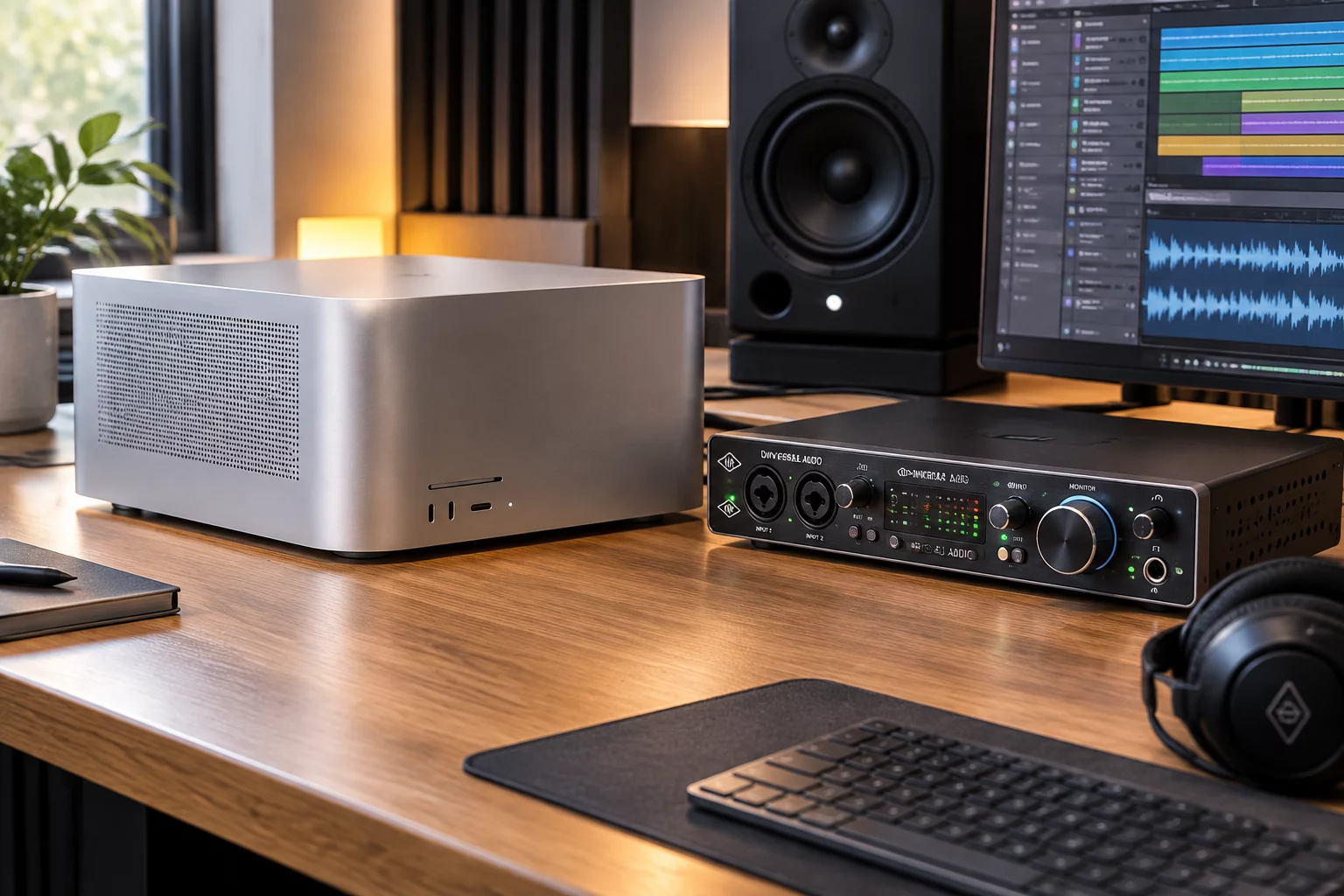
Architectural Shift: Native Optimization Meets Demanding Take Management
Heavy vocal comping sessions previously suffered not from raw computational limits, but from subtle latency penalties introduced during disk cache re-allocation and crossfade rendering. With Pro Tools 2026.4.1, Avid compiled the audio engine specifically for the unified memory hierarchy of Apple Silicon M5 chips. In our studio stress tests, running 48 simultaneous vocal playlists with continuous lane auditioning showed an absolute absence of buffer underruns, while complex pitch correction modules ran simultaneously in real time.
— Marcus Vance, Senior Technical Editor“The transition to native M5 instruction sets removes the subtle microscopic micro-stutters during rapid playlist switching that previously forced engineers to bump buffer sizes up to 256 samples.”
Rigorous Testing: 128-Track Comping Stress Protocol
The editorial team subjected version 2026.4.1 to a standardized vocal compilation stress suite: 128 tracks of 96 kHz, 32-bit float audio featuring over 1,400 active edit points, six background harmonies, and heavy bus sidechain routing. Under previous releases running under emulation, rapid playlist navigation created brief graphical pauses and momentary audio dropouts. On the M5 architecture, memory bandwidth exceeds 300 GB/s, enabling the playback engine to retain active audio buffers directly inside high-speed unified RAM.
The practical outcome for day-to-day studio production is palpable fluidity. Vocal producers can cycle through alternate takes while the vocalist is actively rehearsing the next phrase, eliminating any interruption in creative momentum. Furthermore, the integration with native AAX modules guarantees that phase-coherent edits across multi-mic acoustic setups remain strictly aligned without phase shift or delay compensation mismatches.