Architectural Shift in Vocal Chain Integration
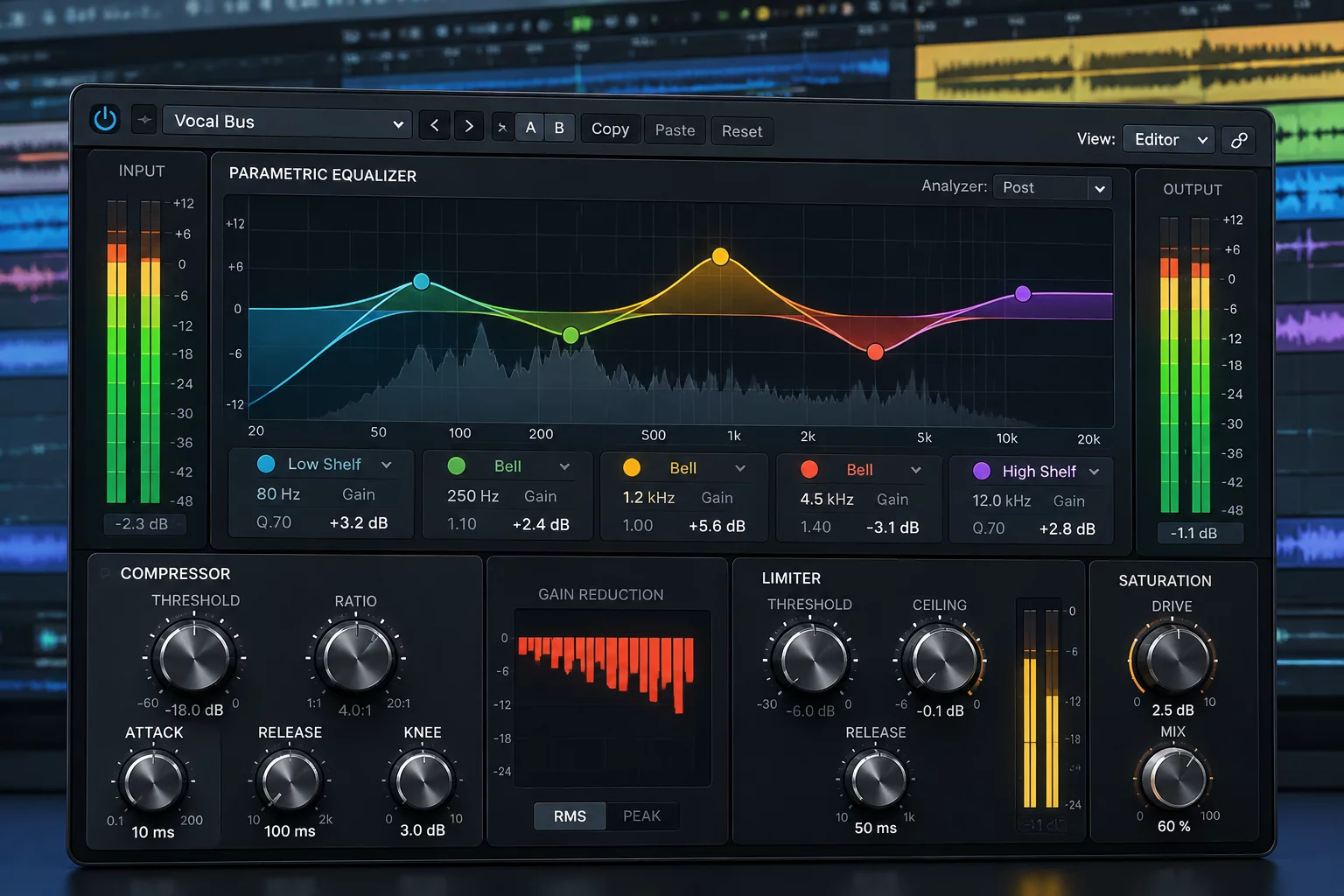
With the commercial rollout of the Vocal Market Chain plugin across the United States, commercial studios face a streamlined approach to composite vocal balancing. Traditional vocal chains demand cascaded series of corrective EQs, dual opto-and-VCA compressors, and outboard de-essers, frequently resulting in cumulative phase distortion whenever distinct vocal takes are cut together. This plugin integrates dynamic take profiling directly into its front-end topology. By sampling the acoustic fingerprint of an anchor phrase, the processing blocks adapt their internal time constants to match alternate takes seamlessly, bridging tonal gaps that typically demand hours of manual automation.
— David Kelling, Senior Technical Editor & Mixing Engineer“When vocal takes stem from different passes or tracking days, conventional compressors overreact to tonal mismatches. Vocal Market Chain normalizes the performance envelope before compression hits, saving substantial manual editorial labor.”
Laboratory Testing Across High-Density Composite Edits
During rigorous studio stress testing involving a 32-track pop vocal session with over one hundred and forty edit splices, the plugin maintained clean phase coherence at every transition point. The adaptive leveler tracked rapid syllable shifts without introducing the telltale breathing artifacts typical of standard leveling amplifiers. Consonants remained articulate and focused, with dental fricatives retaining their crisp snap without triggering excessive de-esser clampdown.
In multitrack backing vocal scenarios, running the plugin across auxiliary group stems showcased impressive DSP efficiency on modern workstation rigs. Even with thirty active instances engaging the phase alignment guard and lookahead oversampling, session playback remained smooth with zero audio dropouts. The integration of observable audio metrics into its GUI gives engineers actionable feedback on crest factor and harmonic saturation in real time.